Isobutylene started gaining real industrial traction in the early 20th century, riding the wave of petrochemical advancements. Going back to the gasoline shortages of the 1940s, this compound became a critical player in producing synthetic rubbers, especially butyl rubber found in tires. Refineries ramped up isobutylene output when scientists figured out how its unique carbon structure worked wonders for making rubber materials more flexible and airtight. As car culture picked up speed, so did the need for more isobutylene—driving continued innovations in distillation and catalytic processes throughout postwar decades. These developments led to more efficient ways to isolate high-purity isobutylene, benefiting both the chemical and automotive industries.
Many people outside chemical circles overlook isobutylene’s significance, yet few realize how foundational it is in daily life. It’s a colorless, flammable gas that doesn’t carry a strong odor and rarely gets noticed unless its handling goes wrong. Refineries pull isobutylene from cracked petroleum or by dehydrating tertiary butyl alcohol, making it a fixture in the production of synthetic rubbers, gasoline additives, and even certain plastics. Beyond the fuel and rubber markets, chemists shape isobutylene into essential products like methyl tert-butyl ether (MTBE), a major player in boosting gasoline’s anti-knock quality for decades until environmental concerns shifted focus elsewhere.
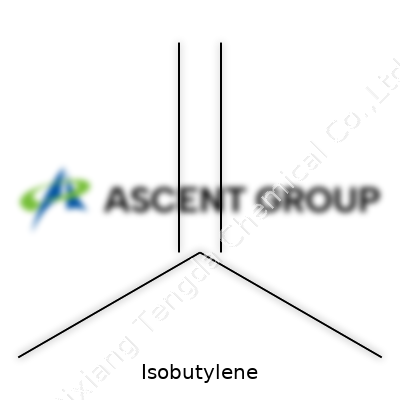
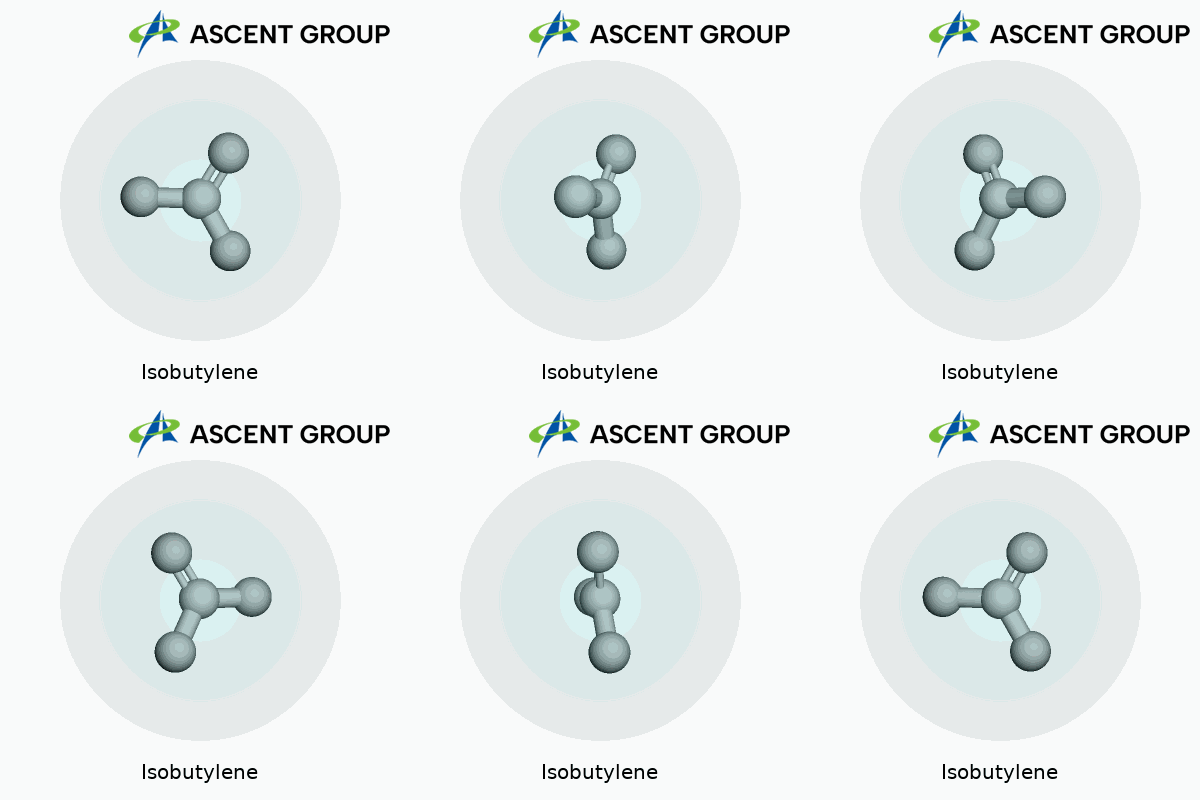
Isobutylene holds a simple but sturdy chemical formula, C4H8, and a branched structure that makes it reactive in the right situations. It has a boiling point near -7°C, making storage and transportation a real challenge in warm climates or under pressurized conditions. The molecule’s double bond sits on a tertiary carbon, supporting chemical reactivity, especially in polymerization. Handling this compound requires care, not just because of flammability, but the ease with which it can catalytically transform into longer-chain polymers or oxidize under uncontrolled conditions.
Commercial isobutylene hasn’t changed in core composition for years, but purity standards have become stricter as end-use applications raised the bar. Production lots often come with purity claims above 99%, driven by downstream needs for high-quality isobutene in synthetic rubber manufacture and other specialty chemicals. Shipping containers and bulk packaging require clear hazard labeling, warning handlers about the risks of inhalation, static discharge, and explosion. Regulatory agencies enforce tough labeling rules, particularly during international transit, following established guidelines rooted in both worker safety and environmental protection.
Industrial producers rely on techniques like catalytic cracking and isomerization to pull isobutylene from mixed streams of hydrocarbons. The energy landscape changed the way companies approach these processes. In the past, steam cracking of naphtha streams dominated, but lighter feedstocks from shale gas operations now push for tailored catalytic solutions. Each batch processed means balancing temperature, pressure, and the right combination of catalysts to get a pure product without sacrificing efficiency. As with most carbon backbone molecules, small tweaks in process conditions can swing yields by a surprising margin, so seasoned engineers often operate by feel as much as textbook spec.
Chemists know isobutylene for its readiness to polymerize, especially in the presence of strong acids. This leads directly to the synthesis of polyisobutylene, a backbone of butyl rubber. Beyond polymerization, isobutylene acts as a feedstock for alkylation reactions, which allow it to attach to other hydrocarbons and build complex fuel additives. Its reactivity under acid catalysis also opens pathways to intermediates like isooctane, further broadening its chemical family tree. Laboratory and industrial settings both count on a reliable supply to keep these reaction chains running smoothly.
Isobutylene goes by a few other names in industry, including isobutene and 2-methylpropene. Depending on which process or region you find yourself in, the term may change but the chemical remains the same. Companies sometimes label it by trade names in proprietary blends, but for the most part, chemists worldwide recognize this compound for its structure and core functionalities rather than branding.
Safety with isobutylene starts on the loading dock and follows every step through processing and storage. Its flammability takes the spotlight, leading to stringent protocols around spark-free tools, proper ventilation, and leak detection equipment. Operators train on emergency shutdowns, as vapor clouds pose explosion hazards especially in confined spaces. Decades of incident data have shaped modern best practices, including remote monitoring and routine equipment checks. Industry regulations require not just basic hazard communication but rigorous documentation and adherence to the latest safety standards in chemical engineering.
Rubber manufacturing stands as isobutylene’s major user group, specifically in tire inner linings, sealants, and hoses. Its chemical backbone gives butyl rubber unique weatherproofing features, helping vehicles stay safe and efficient on the road. Refiners and petrochemical firms count on isobutylene to make high-octane fuel components and specialty chemicals for food grade packaging and adhesives. Even outside these main markets, niche applications appear—from lubricant additives to resin modifiers for construction materials. The diversity of its uses highlights this molecule’s role in keeping several industries operating smoothly.
Recent years brought a wave of attention to sustainable source development for isobutylene. Interest in bio-based production grows as researchers hunt for processes using renewable feedstocks instead of fossil-derived hydrocarbons. Pilot plants test fermentation pathways and engineered microbes, seeking commercial viability. Other research targets improving catalytic yields or curbing energy consumption in traditional processes. Analytical labs keep refining detection and purity assays, trying to catch trace contaminants before they hit downstream recipes. Progress often arrives in small steps, but laboratory victories do find their way into plant upgrades or new technology rollouts.
Most toxicity studies show isobutylene doesn’t rank highly on chronic risk measures when compared to more notorious hydrocarbons. Inhalation, especially in unventilated spaces, can still cause dizziness or headaches—enough to warrant careful monitoring and personal protective equipment for anyone working around bulk storage. Long-term research into low-level exposure continues, given evolving standards in occupational health. Spills or accidental releases prompt environmental monitoring since its volatile nature means it can contribute to ground-level ozone formation and air quality issues in urban zones. Agencies remain vigilant, continually updating guidelines in light of new health data.
As global economies transition toward cleaner energy and greener supply chains, isobutylene’s production faces a crossroads. Cleaner refining methods, alternative feedstocks, and upgraded recycling streams show potential, but competing with established fossil-fuel economics proves tough. Markets like electric vehicles threaten to siphon off traditional automotive demand in the long run, but innovation in packaging, medical elastomers, and specialty chemicals can keep this compound relevant. Teams working on carbon capture and renewable process integration remind us that adaptability sits at the core of every legacy chemical’s future. For isobutylene, the push for safety, sustainability, and new applications creates both challenges and opportunities as we rethink how basic molecules fit into the world’s shifting material needs.
Take a good look at the buildings, highways, and cars in any modern city. What most folks do not notice is how many of these things depend on substances that rarely make the news. Isobutylene stands on that list. I walked through a hardware store the other day and saw rolls of rubber roofing stacked higher than any kid could reach. The label didn't mention isobutylene, but I knew its fingerprints marked every sheet.
If you drive, you’ve rolled on isobutylene's work, even if you never saw the tank trucks at the chemical plant. Tires soak up abuse from potholes and hot pavement, and much of their stamina comes from butyl rubber, born from isobutylene. That’s not small potatoes, considering the world churns out hundreds of millions of tires each year. Synthetic rubbers using isobutylene keep air inside your tires longer, which means fewer flats at the wrong moment.
People used to hunt for missing food container lids, blaming the dog or the kids. But synthetic rubbers and plastics—again, with roots in isobutylene—turned food storage into a reliable science. Food containers seal tight, and they don’t crumble at the first sign of cold in the fridge or heat in the microwave.
Gasoline today isn’t just oil and luck. Clean-burning gasoline matters more now than ever, with cities choking on smog and governments tightening rules. Isobutylene finds its way into the mix through methyl tert-butyl ether, better known to folks in the oil industry as MTBE. This compound bumps up the octane rating in gasoline and keeps engines running smoother while cutting down on air pollution. The story changes from country to country, since MTBE’s environmental drawbacks have rung alarm bells in some regions, but the chemical problem—making fuel less destructive—remains the same.
Think about a hospital stay. Many medical stoppers, liners, and pharmacy bottle caps owe their reliable seal and resistance to chemical leaks to isobutylene-based materials. Doctors and pharmacists can trust these seals to keep medicines stable and safe from moisture or contamination. Noses sensitive to harsh chemical smells might want to thank isobutylene as well. It plays a part in cosmetics—lipsticks and cream foundations—that have to be gentle and stable without running off people’s faces after an hour in the sun.
In my years working in industry, I watched as researchers wrestled with one big challenge: production accidents and leaks bring real worry. Isobutylene doesn’t just disappear if mishandled. Factory safety checks cost money, but skipping steps can create toxic workplaces or pollute the air around neighborhoods. Honest, regular inspections and safety drills help protect workers and local families. Companies face pressure to recycle more or catch emissions before they leave the smokestacks.
Change won’t come through bans and wishful thinking. Engineers and chemists find ways to recycle chemical byproducts, or look for greener materials that fill the shoes isobutylene wears. Smart policies encourage investments in upgraded facilities and new chemistry, turning past mistakes into cleaner, safer industry.
It’s easy for most people to write off chemicals with long names, but behind that string of syllables stands the invisible supporting cast for tires, medicines, and everyday plastics. Knowing the importance of isobutylene in so many corners of life makes it clear that improvements in its handling ripple out, touching health, safety, and quality of life for millions.
Think about a clear, colorless gas you don’t see every day in the news, but one that fuels everything from the rubber in your car tires to the flavor you taste in chewing gum. That’s isobutylene. The world runs thanks to the tiny building blocks you rarely notice, and isobutylene happens to be one of them. Boasting a low boiling point—around minus seven degrees Celsius—it turns liquid easily under mild pressure, which makes it manageable for industry. This simple molecule, just four carbons and eight hydrogens, enables more than its chemical formula suggests.
My background in process engineering pulled me into countless conversations about raw materials. Isobutylene keeps popping up wherever synthetic rubbers or specialty plastics are in demand. It brings along a knack for combining with other molecules. In refineries, operators pull isobutylene from streams of hydrocarbon gases, targeting it for its unique double bond—think of it as a molecular hook. That reactive double bond gives isobutylene the ability to snap together with other chemicals, forming longer and more complex chains. Without this characteristic, we wouldn’t have butyl rubber, fuel additives, or even the protective inner lining in food containers.
Now, handling isobutylene asks for respect and proper training. I’ve worked in industrial settings where even seasoned operators stay alert. As a gas, isobutylene can build up quickly in confined spaces, displacing oxygen and posing a real risk. Its flammability can’t be ignored—leaks or spills can ignite at room temperature from something as minor as static electricity. These are not just reminders in a safety manual. Reports from the U.S. Chemical Safety Board remind us of real incidents when poor ventilation led to fires. So plant engineers foster a culture that takes leak detection and emergency procedures seriously. This goes beyond protecting profit margins—it’s about keeping people safe.
Scientists have leaned on isobutylene to advance greener technology, too. Efforts are underway to produce it from renewable resources, steering away from crude oil and gas. Biobased methods use engineered microbes to ferment plant sugars into isobutylene, reflecting a bigger push for eco-friendlier industrial chemistry. The chemical industry’s investments here support climate goals and can lower greenhouse gas emissions in the long run.
From my own work with startups tackling chemical recycling, I notice many believe that “small” gases like isobutylene can’t play a role in sustainability. That’s off the mark. Choosing renewable feedstocks for isobutylene production could ripple through supply chains, reducing reliance on fossil fuels. Policy incentives and updated infrastructure could make this transition smoother, but real progress will require collaboration across industries, research labs, and regulatory agencies.
Isobutylene, with its light, volatile nature, highlights fundamental choices we make every day in shaping products and managing risks. Its properties make modern life possible—tires that grip wet roads, plastics that keep food fresh, additives that prolong engine life. Trust in this molecule grows from decades of research, skilled hands committed to chemical safety, and innovation focused on a cleaner world.
People rarely stop to think about what goes into products like synthetic rubber, plastics, or even the gasoline that powers cars. Isobutylene plays a big role in all of these everyday goods. I remember touring a petrochemical plant years ago, answering the same type of questions I once had as a chemical engineering student: where do all these raw materials really come from, and what happens before they end up in things like car tires or kitchen gloves?
Isobutylene comes out of a handful of main methods, but most of the world relies on either steam cracking of hydrocarbons or catalytic dehydrogenation of isobutane. Steam cracking feels almost magical the first time you see it: you take a mix of hydrocarbons and heat it so hot with steam that the molecular bonds snap apart, spewing out a range of products—one of which is isobutylene. Ethylene, propylene, and butadiene usually hog the spotlight, but isobutylene gets separated and refined too. The process is powerful, but it’s also energy hungry. According to the International Energy Agency, chemical manufacturing eats up about 10% of the world’s energy supply, much of it for tasks just like this.
You also get isobutylene by dehydrogenating isobutane, which sounds simple—just take isobutane and pull off some hydrogen atoms. It’s anything but straightforward in practice. Temperatures run high, catalysts must run just right, and the reactors need to be built to survive harsh conditions. Even minor hiccups can lead to shutdowns or safety concerns. A study from the American Chemistry Council hints that energy costs and plant reliability can have a direct impact on global market prices for everything that relies on isobutylene as a building block.
Isobutylene doesn’t just matter to chemists and plant operators. It flows into medical supplies, sports equipment, and even helps create the gasoline blendstocks that power road trips across the country. If supply gets shaky, people notice. Raw material price spikes almost always trickle down to consumers—just look at the jump in tire prices in recent years.
Environmental impact matters, too. Steam cracking and dehydrogenation both throw off sizable carbon emissions. Greenhouse gases from the chemical industry stack up quickly, and isobutylene production shares some of that burden. The European Environment Agency has pointed out that process improvements, especially heat recovery and catalyst optimization, can slash emissions and waste, making a dent in the industry’s carbon footprint. This isn’t just about being green for show. In Europe, emissions costs keep rising, eating into profits. Companies that invest early in cleaner tech or use renewable feedstocks can stay competitive and avoid regulatory headaches.
If isobutylene feels like a behind-the-scenes player, that’s only because most folks don’t see what’s behind product price tags. Cleaner and more efficient plants matter as much as oil reserves or workforce skills. A few companies have started recycling isobutylene from waste gas streams or experimenting with bio-based feedstocks. Early tests look promising and could set a new standard. As someone who has seen both the risks and the opportunities inside plants, I can say that pushing for safer, smarter operations gives everyone—from workers to end customers—a much better deal in the long run.
True progress on isobutylene starts by paying attention to how it’s made and what it means for both industry and regular people. Supporting practical solutions, not just buzzwords, will shape what ends up in hospital rooms, under the hood, or on a factory floor tomorrow.
Many folks have no reason to give isobutylene a second thought, but this colorless gas finds its way into everything from gasoline to synthetic rubber. City drivers might not realize their tires and some fuels rely on this simple molecule. The conversation about safety starts as industries grow and neighborhoods and workers come into closer contact with chemicals like this one.
Breathing room matters in workplaces. Inhaling isobutylene in high concentrations can lead to dizziness, headaches, or even loss of consciousness. The chemical displaces oxygen in the air, and a person without proper ventilation is at real risk. Most incidents don’t make headlines, but the records kept by the U.S. Occupational Safety and Health Administration show that high exposures have sent employees to emergency rooms over the years.
Scientific evidence points out that isobutylene doesn’t linger inside the body. Once someone moves to fresh air, their symptoms fade quickly. It doesn’t cause the kind of long-lasting damage linked to chemicals like benzene or asbestos. That said, the speed of exposure still creates urgent threats. Every few years, reports surface where poorly ventilated rooms, broken valves, or overlooked safety gear turn routine shifts hazardous.
Skin and eye contact count, too. Liquid isobutylene, if accidentally splashed, can lead to frostbite since it’s commonly stored as a cryogenic liquid. Workers handling pressurized containers need to suit up and check equipment because a careless moment around these can teach a hard lesson fast.
Flammability raises the stakes next. Isobutylene catches fire easily—even a small leak creates a dangerous situation. Emergency records reveal that leaks have triggered fires and big explosions at processing sites worldwide. One spark from nearby machinery or static discharge turns a slow leak into a disaster. In city environments, the threat isn’t limited to the worksite itself—nearby communities worry about what drifts downwind.
Health agencies across the globe don’t classify isobutylene as a cancer risk like some chemicals found in industrial settings, which brings a measure of relief. But being non-carcinogenic isn’t the same as being harmless. Acute risks—such as suffocation or burns—call for attention every day. The American Conference of Governmental Industrial Hygienists gives guidelines for what counts as safe exposure, and regular air monitoring helps keep workers safe. Facilities with a track record of investment in training and detection technology see fewer accidents.
Solutions aren’t out of reach. Good ventilation in enclosed spaces, alarms that warn of leaks, and strict storage protocols keep workers protected. Regular drills mean no one fumbles through an evacuation. The best-run operations encourage reporting near misses and reward teams for catching problems early. These practices go beyond compliance; they build habits and accountability.
Beyond the factory gates, transparency builds trust. When companies share air monitoring data or details about accident responses, neighbors see that risks exist but are being managed. As cities expand and industries grapple with new hazards, honest conversation lays a foundation for everyone’s peace of mind.
Walking through any large chemical storage site, you notice how some tanks draw more caution than others. Isobutylene is one of those chemicals requiring respectful handling. While I haven’t spent endless hours inside petrochemical plants, the hours I have spent highlight how easily unmanaged risks turn into accidents. Stories circulate among workers — leaky flanges, vapor clouds near heat sources, alarms that nobody hears until it’s nearly too late. People who cut corners to save time rarely stick around long: limits exist for a reason.
Isobutylene stands out for one simple reason: it ignites easily. It doesn’t need much of a spark or open flame. In the United States, the OSHA and NFPA both stress the explosive hazards it brings. Even at room temperature, isobutylene releases vapors dense enough to hug the ground, sneaking into trenches, valves, or confined spaces. These hidden pockets can spell disaster if ignored.
Gas or liquefied gas, isobutylene gets stored in pressurized tanks, and always away from direct sunlight and sources of heat. Unlike some chemicals that tolerate wider temperature swings, this one keeps people strictly on alert. A solid fence, clear warning signs, and regular patrols discourage careless behavior and reduce temptation to take shortcuts. Ventilation counts for a lot. Without it, invisible vapor builds up. Sudden release, even from a single valve, might mean an evacuation or worse.
Years ago, one plant in Texas scrambled after a careless repair crew forgot to purge the lines before restarting. The resulting fireball cost millions and left scars on more than a few. Afterwards, nothing got left to chance — double checks, gas detectors, triple-verification on procedures. I learned that day, complacency doesn’t mix with isobutylene.
Storage always benefits from double-layer safety. Companies use pressure-relief valves, grounding wires, and explosion-proof electricals. Staff with hands-on roles wear antistatic clothing. Training never ends. Good managers walk the site, spot-check procedures, and repeat the message: one misstep doesn’t just cost money, it can end a career or life.
Despite strict codes, preventable incidents still happen. Routine doesn’t equal safe. Plants that encourage open talk about hazards — and actually listen — catch issues early. Technology offers more options too: remote monitoring, better leak detection, and automated shutoffs save lives when humans miss a cue. Worker buy-in grows with transparency about what the risks really are.
Complacency crumbles in the face of open communication and constant improvement. Investing in reliable storage tanks, well-maintained transfer lines, and regular system audits reduces accidents. It isn’t just about ticking off compliance boxes, but keeping families whole at the end of each shift.
The real lesson is simple: Respect the chemical, respect the process, and protect the people. Every extra safeguard is worth the trouble, because nobody remembers the barrel that sat quietly. They always remember the day it didn’t.